Venue
Grand Harbour
Valletta, Malta
No sailing events scheduled at Grand Harbour.
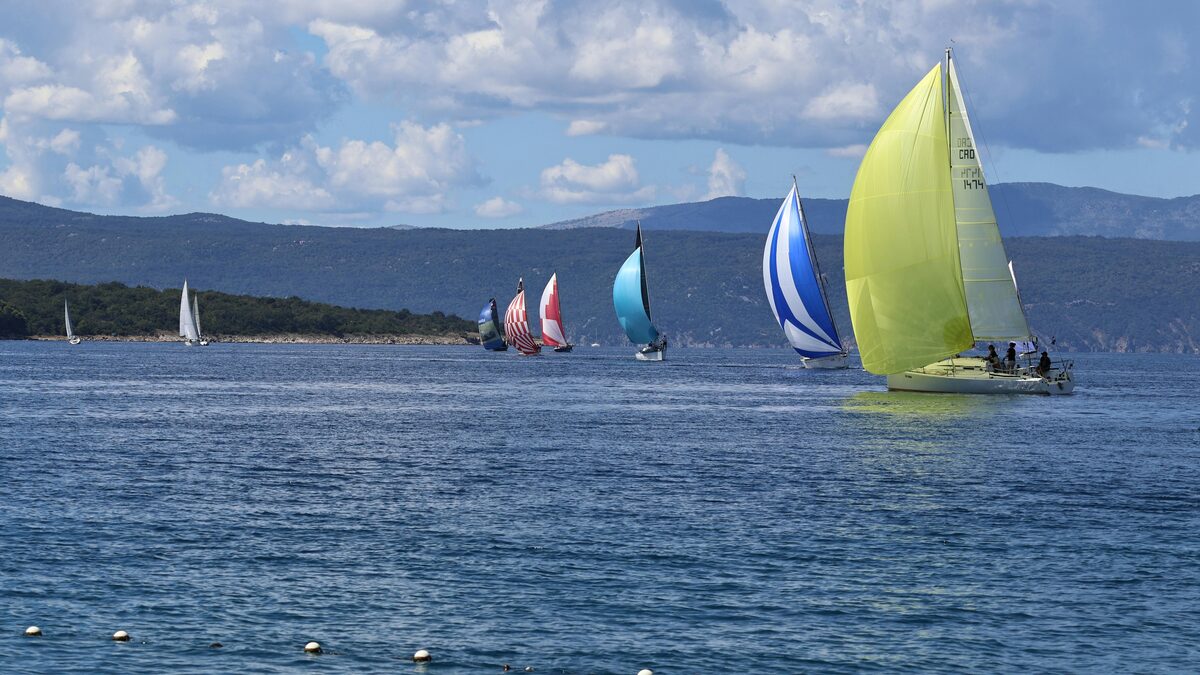

Valletta's Grand Harbour has been a strategic anchorage for over 2,000 years, from Phoenician traders to the Knights of St. John to the Royal Navy. The fortified entrance between Fort St. Elmo and Fort Ricasoli, with its honey-coloured limestone bastions rising from the water, provides what is widely considered the most dramatic race start in offshore sailing when the Rolex Middle Sea Race fleet pours through the harbour mouth in October.
Malta's position in the central Mediterranean exposes it to multiple weather patterns, and October racing can encounter any of them. The Gregale, a strong northeasterly wind that builds over the Adriatic and the Ionian Sea before crossing Malta, can bring sustained 25-35 knot winds with heavy seas that challenge even fully crewed offshore racers. The Sirocco, from the south, brings warm, humid air from North Africa and can carry Saharan dust that coats everything and reduces visibility to a few miles. Between these extremes, the Mediterranean's own thermal patterns deliver the 12-18 knot racing wind that makes the sea state manageable.
The Middle Sea Race course takes fleets through the Strait of Messina between Sicily and Italy's toe, around the volcanic Aeolian Islands including Stromboli, and back via the Sicilian coast. This course exposes boats to one of the Mediterranean's most varied and demanding weather environments: the Strait of Messina produces its own acceleration effects, and the Aeolian Islands sit in the path of systems tracking from the western basin.
Water temperature in October is 22-24 degrees, still warm enough for a capsize recovery to be manageable but a reminder that the Mediterranean's summer comfort is fading. Tidal range at Valletta is minimal, under 30 centimetres.
The Rolex Middle Sea Race was first held in 1968 and has grown into one of offshore sailing's most prestigious events, ranking alongside the Fastnet Race and the Sydney Hobart as a top-tier ocean race. The course is 607 nautical miles, entirely within the Mediterranean, taking in some of the sea's most dramatic geography. Erupting Stromboli, whose volcano fires regularly at night, provides a navigational landmark and a visceral reminder that this is genuinely wild country. Fleets of 80-100 boats from across Europe, the Mediterranean, and beyond converge on Valletta for the October start.
The race has produced some extraordinary finishes and some destructive gales. The 2014 race saw a severe storm in the Sicilian Channel that forced widespread retirements and tested the safety systems of the entire fleet. The race continues to attract the ambitions of offshore sailors who want to race a genuine ocean course in a compact, accessible format.
The Grand Harbour's fortified entrance creates the most dramatic departure in offshore racing. Spectators line the bastions of Fort St. Elmo and the Upper Barrakka Gardens for the start, watching the fleet sail past 500 years of military architecture. The scale of the fortifications dwarfs even the largest race yachts, creating a visual contrast that is impossible to replicate at any other venue. After the start, tracking continues through the Royal Malta Yacht Club's online race tracker for the five to seven days the fleet takes to complete the course.
The Upper Barrakka Gardens, which overlook the harbour entrance from above, provide the best elevated viewing position. The Valletta waterfront and the Three Cities across the harbour also offer excellent shore viewing. Malta's capital, a UNESCO World Heritage City of just 6,000 residents, becomes the centre of the Mediterranean sailing world for the October start period.
Malta is an archipelago of three main islands in the central Mediterranean, 93 kilometres south of Sicily and 288 kilometres north of the Libyan coast. The island's strategic position has made it one of the most contested pieces of territory in history: colonised by Phoenicians, Greeks, Carthaginians, Romans, Arabs, Normans, Knights Hospitaller, French, and British in succession. The fortifications that ring the Grand Harbour were built by the Knights of St. John in the 16th century, withstood the Great Siege by the Ottoman Empire in 1565, and endured intensive German and Italian bombing during the Second World War.
The Royal Malta Yacht Club, founded in 1835, organizes the Middle Sea Race from its clubhouse on Ta' Xbiex waterfront. The club's 190-year history mirrors Malta's transformation from a British naval base to an independent Mediterranean nation with a growing reputation as a sailing destination.
The IANA timezone is Europe/Malta (CEST, UTC+2 during summer, CET UTC+1 from late October). The Middle Sea Race start in mid-October may fall on either side of the clock change. An 11:00 CET start converts to 10:00 GMT in London, 05:00 EST in New York, and 20:00 AEST in Sydney.